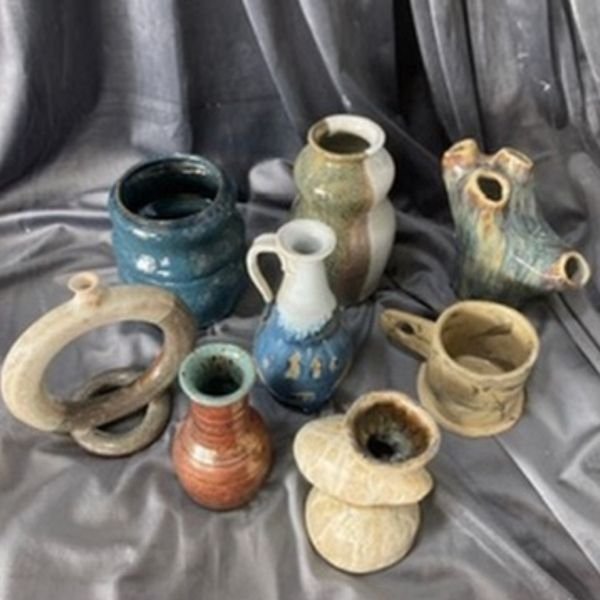
Walk into any pottery studio and you’ll notice the same thing: people leaning over spinning wheels or shaping lumps of clay with their hands, totally absorbed in the process. It looks simple, but the practice has roots stretching back thousands of years. In a world overflowing with mass-produced everything, it begs the question: why are we still drawn to clay?
Pottery’s ancient beginnings
Clay is one of the first materials humans ever worked with. Archaeologists have found fragments of pots that are more than 15,000 years old. They weren’t fancy — just rough containers meant to hold water, cook food, or store grain. But even in those earliest examples, you can see fingerprints, carved patterns, little touches that prove people weren’t just making for survival. They were also leaving a mark.
What’s fascinating is that this happened all over the world, independently. In China, in Mesopotamia, in Japan, in the Americas — wherever there was clay and fire, people figured out how to turn mud into something lasting.
Useful, yes — but also enduring
One of the reasons pottery never disappeared is because it works. Fired clay is tough. It can handle heat, it doesn’t spoil food, and when it’s cared for, it can last generations. Think about it: when archaeologists want to understand an ancient culture, they often study pottery shards because they’re some of the only things that survive.
That same durability still appeals today. A ceramic mug might chip, but it won’t crumble like plastic. A handmade bowl doesn’t just serve dinner; it becomes part of the ritual. Over time, you reach for the same piece again and again, and it almost feels like it’s part of the household.
Clay as a canvas
But let’s be honest — if pottery were only about storage, we’d have stopped making it ages ago. The real beauty of clay is that it’s both functional and expressive. Cultures all over the world decorated their pottery to tell stories, mark rituals, or simply make something useful a little more beautiful.
The Japanese tea bowl, with its irregular lines and quiet presence, teaches us that imperfection has its own kind of elegance. A Greek amphora, painted with mythological scenes, shows how everyday objects doubled as storytelling devices. Even today, artists push clay far beyond cups and plates, creating large-scale sculptures or experimental forms that belong in galleries as much as kitchens.
The pull of touch
Ask anyone who works with clay what they love most, and chances are they’ll mention how it feels. There’s something grounding about sinking your hands into a lump of earth and shaping it into something recognizable.
It’s not just about making — it’s about slowing down. The wheel hums, your hands move rhythmically, and for a while you forget the noise of the outside world. Some call it mindfulness, others call it therapy. Either way, it’s rare to find an activity that engages your senses so fully.
More than a hobby: a community
Pottery is rarely done in isolation. Studios become hubs where people of all backgrounds gather. Beginners sit next to experienced potters, advice gets passed around the room, and everyone huddles together to peek inside the kiln when a firing finishes.
That sense of shared anticipation and discovery is part of what makes pottery special. It’s not just you and the clay — it’s you, the clay, and the community that surrounds it. In many ways, pottery keeps cultural traditions alive because knowledge isn’t just written down, it’s demonstrated, practiced, and shared.
Pottery in today’s world
So why does pottery still matter in 2025, when most of us can buy a whole set of plates online for less than the cost of a single handmade mug?
For one, there’s the growing desire to slow down. Many people are tired of disposable products and constant digital distraction. Pottery offers the opposite: something tangible, lasting, and made with care.
There’s also sustainability. A handmade pot, if cared for, can last a lifetime. And unlike plastic, it doesn’t end up leaching into oceans.
Finally, there’s connection. In an age where much of our interaction is through screens, holding a handmade object feels intimate. You can sense the maker’s decisions — the way a glaze pooled at the bottom, the slight wobble of a rim. No two pieces are the same, and that uniqueness is what draws people back.
Closing thoughts
Pottery isn’t just about clay. It’s about history, usefulness, beauty, and the act of shaping something with your own hands. Every mug or bowl holds more than food or drink — it holds the memory of the person who made it, the tradition it came from, and the simple truth that working with the earth is something humans have always done, and likely always will.