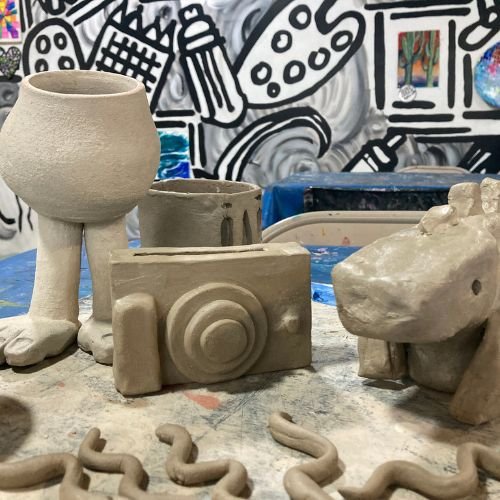
There’s a quiet kind of magic in pottery. Not the “sparkly, dramatic” kind you see in movies, but the simple, grounding kind that sneaks up on you when your hands are covered in clay, and the world outside the studio fades for a while. If you’ve ever watched someone center a lump of clay on a spinning wheel, or seen a group of students hunched over hand-built bowls, you might notice something: they look… peaceful. Concentrated, yes, but also relaxed. There’s a reason for that.
Pottery isn’t just about creating objects. It’s about connecting — with your hands, with the process, and with your own mind. In a world where distractions are constant and stress feels unavoidable, working with clay offers a rare opportunity for mindfulness.
The meditative rhythm of shaping clay
Think about the motions involved in pottery: kneading and wedging clay, centering it on the wheel, pulling up the walls of a pot, trimming edges, and smoothing surfaces. Each action has a rhythm. Your hands feel the resistance, the texture, the temperature of the clay. The wheel hums, water trickles, tools tap against the clay.
That rhythm isn’t just productive; it’s calming. Repetition grounds the mind, much like breathing exercises or yoga. Many people report that after a session, their thoughts feel quieter, their stress levels lower, and their attention sharper. The clay responds instantly to touch — too much pressure, and it collapses; too little, and it won’t shape. That feedback keeps you present, fully engaged with the moment.
Creating without pressure
Another key to pottery’s mindfulness is the lack of pressure to “get it right.” Unlike tasks in daily life that have deadlines, metrics, or right-and-wrong outcomes, clay is forgiving. Mistakes aren’t catastrophic; they’re part of the learning and shaping process. A collapsed wall becomes a new form. A finger indentation can become a design element.
This freedom allows the mind to relax. When there’s no right answer, creativity flows naturally. You’re not just making an object — you’re learning to be patient, to accept imperfection, and to enjoy the process itself.
Engaging the senses
Mindfulness isn’t just about quieting the mind; it’s about tuning into your senses. Clay is wonderfully tactile. It’s cool, pliable, and responsive. The sound of a trimming tool on a leather-hard pot, the sight of a new glaze pooling in the bottom of a bowl, the smell of damp clay and kiln-fired ceramics — all of it pulls your attention away from screens and notifications.
Studies have shown that hands-on creative work reduces cortisol, the stress hormone, and boosts feelings of calm and satisfaction. Pottery is the perfect example: it engages sight, touch, sound, and sometimes even smell. You can be completely absorbed in the physical experience, which is the essence of mindfulness.
Emotional expression and release
Pottery is also emotional. Unlike typing an email or scrolling through social media, clay gives you a physical outlet for feelings. Anger, frustration, excitement, or joy can all translate into form and texture. The slow, deliberate movements required to shape a pot provide a kind of emotional regulation — a way to process and release feelings that words sometimes can’t capture.
Students often describe finishing a piece and feeling a surprising sense of accomplishment and relief. It’s not just about the finished bowl or cup — it’s about what the making process did for their mental state.
Community as a mindfulness amplifier
Even in shared studios, mindfulness isn’t lost. Watching others work can be meditative. There’s a shared quiet energy: people focused, tools clinking, wheels spinning. Instructors often encourage reflection — noticing how the clay moves, how the hands feel, or how emotions shift during the session. Group workshops create subtle, collective mindfulness, where everyone benefits from the same calm, attentive environment.
Mindfulness beyond the studio
The benefits of pottery can spill into daily life. People who make ceramics regularly often report improved focus, greater patience, and an increased ability to slow down. Those quiet lessons from the wheel — attending to small details, embracing imperfection, staying present — translate into work, relationships, and even moments of rest.
Pottery teaches the mind to pause, to notice, and to engage fully with the moment. That’s mindfulness in action: not a buzzword, not a technique, but a lived experience with your hands, your senses, and your mind all at once.
Closing thoughts
In clay, we find more than objects; we find presence. The wheel spins, hands move, mistakes happen, adjustments follow. Time stretches, thoughts quiet, and stress softens. It’s a simple, ancient practice, yet profoundly relevant in today’s fast-paced world. Pottery reminds us that slowing down isn’t indulgent — it’s necessary. And sometimes, the best therapy isn’t in a session or an app; it’s in a lump of clay, waiting to become something beautiful.