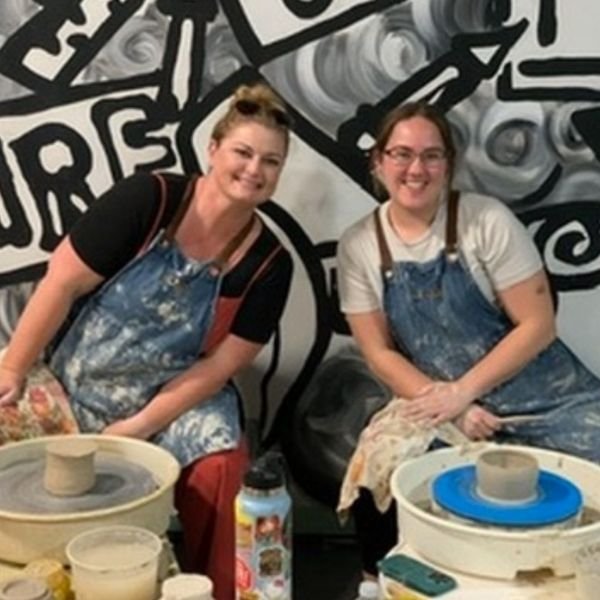
There’s something quietly special about a pottery studio. Even when everyone is focused on their own work, there’s a sense of connection in the air. The spinning of the wheel, the soft scrape of tools, the faint smell of damp clay — it all blends into a rhythm that draws people together.
Pottery is often thought of as a solitary activity, but anyone who’s spent time in a studio knows it can be surprisingly social. Whether it’s helping someone center a stubborn lump of clay, swapping tips on glazing, or just laughing when a mug collapses mid-pull, the community forms almost naturally.
Learning Together
One of the most powerful things about working with clay is how much you learn from others. Beginners often pick up techniques by watching someone else’s hands move, noticing a subtle motion that changes everything. And experienced potters often find inspiration in the fearless creativity of newcomers — someone tries a bold shape, a wild glaze combination, and suddenly you’re thinking differently about your own work.
It’s a constant exchange. Advice, mistakes, little victories — everything gets shared. That shared experience builds bonds faster than you might expect.
Shared Moments and Studio Rituals
Some of the best memories happen during the quiet rituals of pottery. Waiting for a kiln to open, everyone crowded around to see the final results. Glazing sessions that turn into spontaneous brainstorming about designs. Group critiques that leave you laughing more than anything else. These small rituals create a sense of belonging — like you’re part of something bigger than yourself, even if it’s just a handful of clay and a wheel.
Connecting Across Generations and Cultures
Pottery also bridges gaps between people in surprising ways. A teenager learning coil-building might be using techniques similar to those passed down for centuries. Older students often share stories of their first time on a wheel or lessons learned from family traditions. In the studio, history, culture, and personal stories collide, creating a rich tapestry of experiences.
Emotional Benefits
Beyond skills and traditions, the social side of pottery has real emotional benefits. Encouragement from classmates, shared laughter at mistakes, the quiet pride in finishing a piece alongside others — all of this contributes to a sense of wellbeing. Many students say they leave the studio not only with new skills, but also feeling calmer, happier, and more connected.
Community Beyond the Studio
Even outside the studio, pottery communities thrive. Online groups, social media pages, and virtual workshops let people share their work, ask questions, and celebrate each other’s progress. It’s a reminder that this craft doesn’t exist in isolation — it’s part of a global network of hands, hearts, and clay.
Closing Thoughts
Clay has a funny way of bringing people together. Maybe it’s the shared challenge of shaping it just right, or maybe it’s the joy of watching someone else succeed. Whatever it is, pottery creates connections — between students, between generations, and even across cultures.
In the end, the pieces you make are special, yes. But the relationships you build along the way? Those are the real treasures.