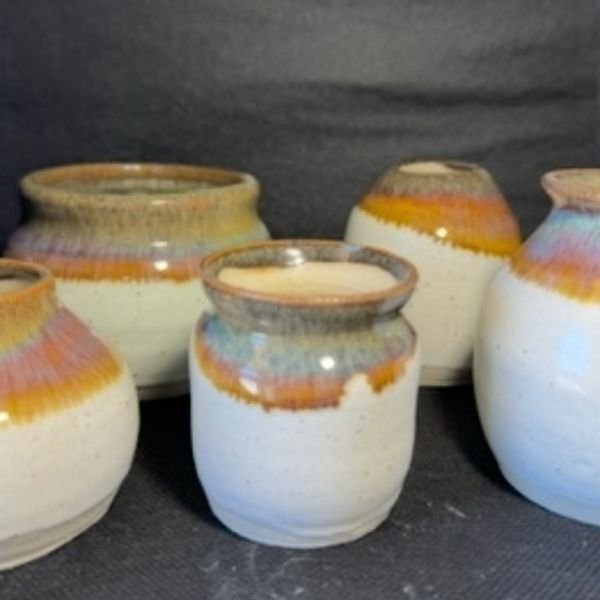
You’ve shaped your clay, pulled it on the wheel or built it by hand, and watched it dry. Now comes one of the most transformative parts of pottery: glazing. At first glance, glazes might seem like just “paint for clay,” but they are so much more. They’re chemistry and creativity, control and surprise, science and magic rolled into one liquid coat.
Glazing is what turns a simple lump of clay into a finished piece that can hold water, shine in the sunlight, or showcase subtle colors and textures that were impossible to see in its raw form.
What glaze actually is
In its simplest terms, glaze is a glassy coating made from minerals that melts during firing. Once fired, it fuses to the surface of the clay, sealing it, decorating it, and sometimes adding functionality like waterproofing. But within that technical definition lies an endless world of possibilities.
Different glazes behave differently: some run, some pool, some crackle. Some are matte, some glossy, some translucent. The same glaze applied to two similar pieces can look entirely different depending on thickness, firing temperature, or how it interacts with the clay. That unpredictability is part of the allure — each piece is unique, almost alive.
Applying glazes: tools and techniques
Glazing is as much tactile as it is visual. Potters use brushes, sponges, dipping vats, pouring methods, or even spray guns to apply color. Layering glazes can create depth and texture, blending shades in ways a brush alone can’t. Some potters carve patterns into the clay first, then let the glaze settle into the grooves, highlighting every ridge and indentation.
Even beginners can experiment. A simple brush-on application can create streaks or swirls. Dipping can produce uniform coverage. And layering two or more glazes often results in surprising, delightful combinations that no one could replicate exactly.
The kiln: where magic happens
No glaze is truly finished until it has gone through the kiln. The firing process is when minerals melt, colors develop, and textures emerge. That first peek after firing is a moment many potters describe as almost magical: what looked dull or muddy on the unfired piece transforms into something vibrant, glossy, and finished.
Kiln firing also teaches patience and humility. The process is unpredictable. A glaze may turn out differently than expected — and that’s part of the excitement. Even experienced potters embrace the surprise. Every firing is a learning experience, and every “mistake” often leads to inspiration.
Glazing as expression
Beyond function, glazing is a form of artistic expression. The way a color pools, the streaks left by a brush, or the crackle of a fired surface can convey personality, mood, and intention. Two artists could use the same clay form and glaze, and the results would still be completely different. That individuality is what makes handmade pottery so appealing.
Glazing also allows for storytelling. Patterns, colors, and textures can reflect a maker’s culture, emotion, or even a specific moment in time. A warm, earthy tone might evoke autumn, while a bright, glossy turquoise might capture a feeling of joy or freedom.
Tips for beginners
If you’re new to glazing, it helps to start simple:
- Experiment with small pieces first. You’ll learn how glazes behave without risking a large project.
- Keep notes. Record which glazes, thicknesses, and firing temperatures you use so you can repeat successes.
- Embrace the surprises. Not every piece will turn out as planned, and some of the most beautiful effects come from unexpected results.
- Combine techniques. Brush, dip, pour, and layer. The experimentation is part of the fun.
Closing thoughts
Glazing is where pottery transcends mere function. It’s where chemistry meets creativity, and patience meets wonder. A piece that once felt plain and simple can emerge from the kiln transformed into something vibrant, tactile, and utterly unique. The process is unpredictable, but that unpredictability is what makes it magical.
When you glaze, you’re not just coloring clay; you’re telling a story, capturing a mood, and leaving a fingerprint of your creativity for anyone who sees, touches, or uses the piece. And in that transformation, you experience a little of the same wonder that humans have felt for thousands of years — the quiet, enduring magic of turning mud into art.